Waterproofing Guide
Understanding Exterior Waterproofing for Property Protection
01
Why Exterior Walls Require Waterproofing
Many common building materials, such as concrete, brick, and mortar, are not naturally waterproof. Over time, these surfaces develop microscopic pores, hairline cracks, and deteriorated joints that allow moisture to seep into the building envelope. Without proper protection, water can bypass the exterior facade, leading to damage in insulation, drywall, and structural elements. Professional exterior waterproofing addresses these vulnerabilities to ensure your building remains dry and durable.
02
Identifying Common Leak Points
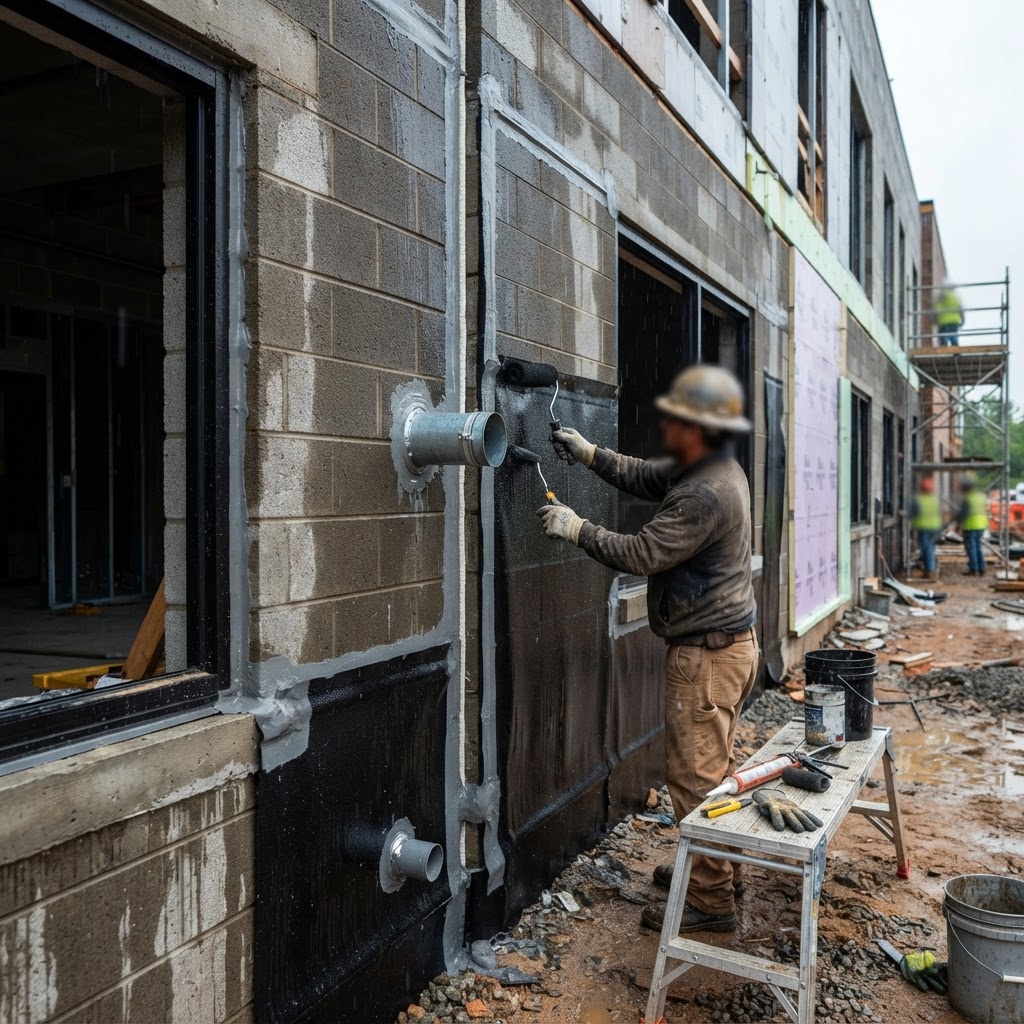
Water rarely enters a building through a solid, intact wall surface. Instead, it typically exploits specific weak points where different materials meet or where the building envelope has been penetrated. Common areas of concern include window and door perimeters, construction and expansion joints, utility penetrations, and wall caps. Regular inspection of these transitions is essential, as even small gaps can allow significant amounts of water to enter during heavy rain or wind-driven weather events.
03
The Role of Protective Coatings and Sealants
A primary component of an effective waterproofing strategy involves the application of high-performance coatings and sealants. These materials are designed to fill cracks and create a seamless, flexible barrier over the exterior surface. By choosing the right system—such as elastomeric coatings or specialized sealants—property owners can bridge small gaps and provide a continuous layer of protection that moves with the building as it expands and contracts with temperature changes.
04
Comprehensive Barrier Systems
Beyond surface coatings, comprehensive waterproofing often utilizes advanced membrane systems. These barriers are applied to the exterior face of the structure to block moisture at the source. Whether using liquid-applied membranes that conform to complex shapes or sheet-based systems for larger areas, the goal is to establish a robust defense that prevents water ingress. For more information on how these systems are applied, you can review our detailed exterior waterproofing service page.
05
Professional Inspection and Maintenance
Because every building has unique exposure conditions and material types, a professional assessment is the most reliable way to determine the best waterproofing approach. Experts evaluate the condition of the substrate, identify existing moisture pathways, and recommend compatible systems that ensure long-term performance. If you are concerned about the condition of your building's exterior, we invite you to explore our service areas to see if we provide coverage in your neighborhood.
Common Questions
Frequently Asked Questions
Signs that your exterior walls may require attention include visible cracks in concrete or masonry, crumbling mortar joints, persistent damp spots on interior walls, or the presence of efflorescence (a white, powdery substance) on the exterior surface.
While some consumer-grade products are available, professional waterproofing requires specialized knowledge of substrate compatibility, proper surface preparation, and the correct application of sealants at critical transitions. Improper application can sometimes trap moisture inside the wall, leading to more significant damage.
If you suspect your property is experiencing moisture intrusion, the best first step is to schedule a professional inspection. You can reach out to our team by filling out our [contact form](/contact/#contact-form) to discuss your specific needs and property requirements.
Continue Learning
Related Waterproofing Guides
Planning a Waterproofing Project?
Noble Waterproofing & Coatings provides free, no-obligation estimates for residential and commercial properties across the Santa Clarita Valley, San Fernando Valley, Simi Valley, Calabasas, Agoura Hills, Malibu, Santa Monica & the Westside.