Waterproofing Guide
Concrete Moisture, Efflorescence and Cracks: What the Signs Can Mean
01
Understanding Efflorescence and Mineral Deposits
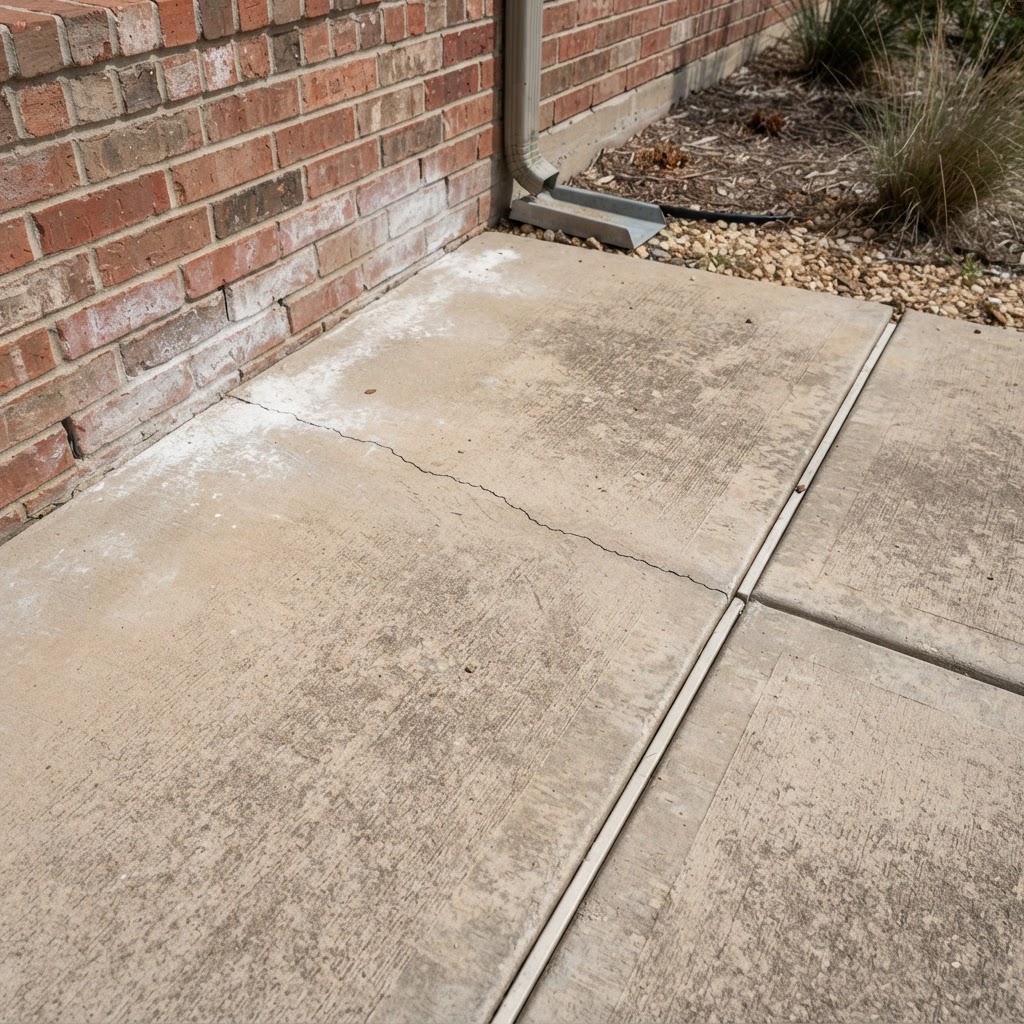
Efflorescence occurs when moisture travels through porous concrete, dissolving internal salts and carrying them to the surface. As the water evaporates, it leaves behind a white, chalky, or crystalline residue [2, 7]. While this substance is often mistaken for mold, it is actually a mineral deposit [9, 10]. Simply scrubbing these deposits away provides only a temporary aesthetic fix; because the residue is a symptom of water migration, the underlying moisture source must be identified and mitigated to prevent the salts from returning [2, 3].
02
Identifying Signs of Persistent Dampness
Concrete that remains discolored or damp long after rain has stopped often indicates a failure in the building's moisture management system. These wet patches can be caused by external factors such as improper site grading, roof runoff, or irrigation systems that direct water toward the structure [7, 9]. Monitoring these areas during different weather cycles helps property owners identify vulnerabilities. Our team offers professional concrete waterproofing services to help diagnose these hidden pathways and implement effective, long-term moisture control strategies.
03
Evaluating Crack Patterns and Structural Concerns
Not all concrete fractures are the same, and distinguishing between them is vital for a successful repair. While some cracks are minor shrinkage issues, others may indicate ongoing structural movement [6]. Applying a rigid repair material to a crack that is still shifting will likely result in premature failure. We perform a thorough analysis of the width, depth, and location of each fracture to determine if a flexible, high-performance system is necessary to accommodate movement and maintain a watertight seal.
04
The Role of Strategic Product Selection
Waterproofing is not a universal solution; the right product depends on the specific needs of the concrete. Options range from penetrating sealers that reduce porosity to film-forming coatings and reinforced membranes designed for heavy-duty protection [8]. Using an incompatible product can trap moisture within the slab, which may accelerate deterioration rather than preventing it [6]. Selecting the correct system ensures that the concrete can breathe while remaining protected from environmental exposure.
05
Prioritizing Surface Preparation
The durability of any waterproofing system is fundamentally dependent on the quality of the surface preparation. Contaminants such as dirt, old coatings, efflorescence, or curing compounds can prevent new materials from bonding effectively [6]. We prioritize mechanical profiling and thorough cleaning to ensure the substrate is fully receptive to the treatment. This rigorous preparation is the essential first step in creating a resilient, high-performance barrier against moisture [8].
06
Managing Transitions and Perimeter Details
Concrete surfaces are rarely isolated; they connect to walls, doors, and drainage points. These transition areas are frequently the most vulnerable spots for water intrusion. Our inspections focus on these critical junctions to ensure they are properly flashed and sealed. By coordinating these details, we help protect the entire building envelope from wind-driven rain and standing water, ensuring a comprehensive defense for your property.
07
Professional Assessment and Next Steps
If you have observed signs of moisture, documenting the location and timing of these symptoms can be highly beneficial during an inspection. We provide expert evaluations throughout our service areas to help property owners move beyond temporary patches toward reliable, long-term solutions. To discuss your property's specific needs and schedule an assessment, please reach out via our contact form.
Common Questions
Frequently Asked Questions
Efflorescence is a mineral salt deposit that typically dissolves in water and crumbles into a powder when touched [3, 9]. Mold is a biological organism that does not dissolve in water and often appears as a fuzzy or slimy growth [9, 10].
No. Waterproofing and protective coatings are designed to manage moisture and seal surfaces, not to provide structural reinforcement. If a crack is caused by active structural movement, that underlying issue must be addressed by a professional before any surface treatment is applied [6].
No. Different products are engineered for specific exposure levels, traffic requirements, and concrete types. Using an incorrect product can result in poor adhesion or trap moisture inside the slab, which can accelerate damage [6, 8].
Continue Learning
Related Waterproofing Guides
Planning a Waterproofing Project?
Noble Waterproofing & Coatings provides free, no-obligation estimates for residential and commercial properties across the Santa Clarita Valley, San Fernando Valley, Simi Valley, and Agoura Hills.