Waterproofing Guide
Understanding Concrete Waterproofing and Surface Protection
01
The Porous Nature of Concrete
While concrete is a foundational building material, it is not inherently impervious to water. During the hydration and hardening process, the material develops a network of tiny capillaries that allow moisture to migrate deep into the slab. When water reaches internal steel reinforcement, it triggers oxidation, causing the metal to expand and eventually fracture the concrete from within. Utilizing professional concrete waterproofing creates a robust barrier that stops this cycle and preserves the long-term stability of your property.
02
Identifying Early Warning Signs
Proactive monitoring is the most effective way to avoid extensive structural repairs. Property owners should watch for signs such as efflorescence—a white, powdery mineral residue left behind as water evaporates—or surface spalling, where the concrete begins to flake or crumble. Additionally, if you observe existing coatings bubbling or peeling, it is often a clear indicator that moisture is trapped beneath the surface, unable to escape through a failing barrier.
03
The Necessity of Proper Surface Preparation
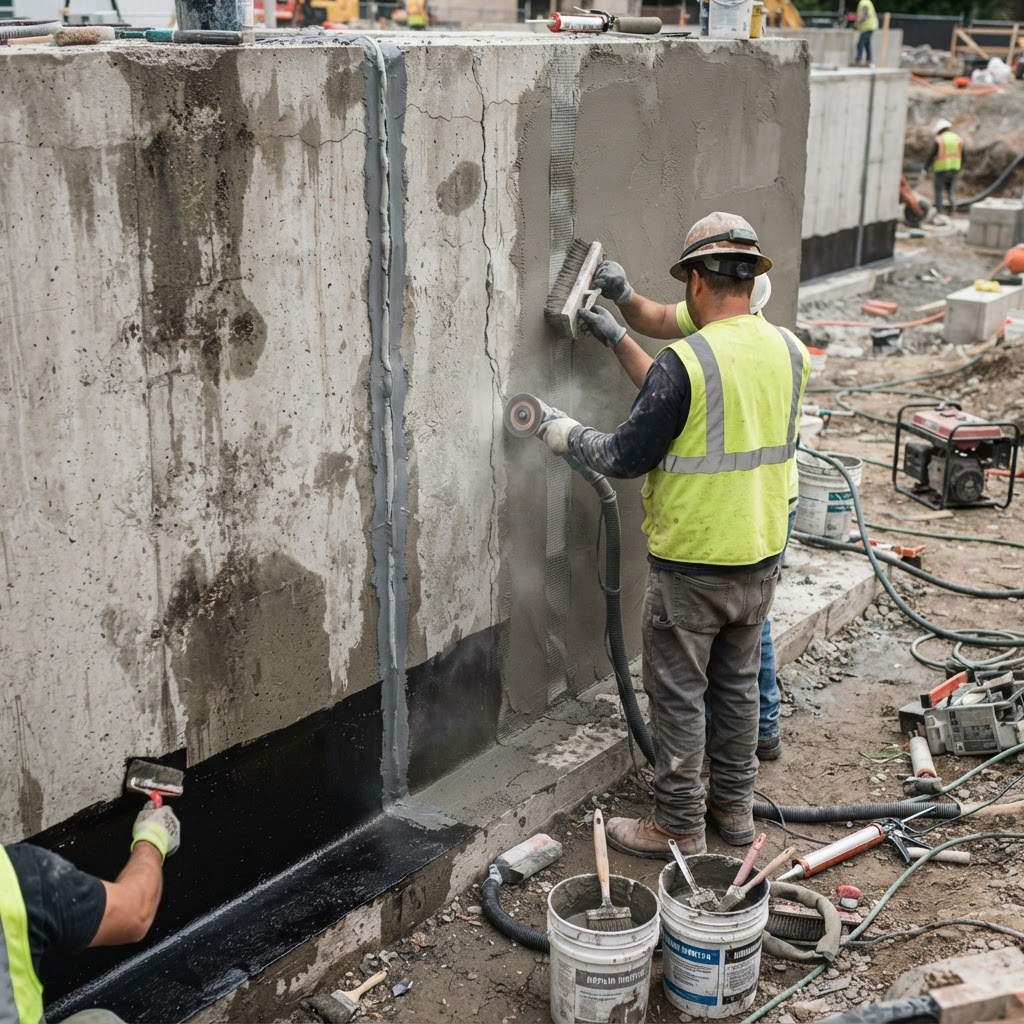
The success of any protective coating is dictated by the quality of the substrate preparation. Before a new system can be applied, the concrete must be completely cleared of contaminants like oils, grease, dirt, and old, failing sealers. Professionals typically use mechanical methods, such as grinding or shot blasting, to open the concrete pores and create an ideal surface profile, which ensures the new coating bonds securely and resists premature delamination.
04
Selecting Compatible Protective Technologies
Different concrete surfaces face unique environmental stressors, ranging from high-traffic pedestrian walkways to commercial decks. Experts evaluate the specific exposure conditions of your property to recommend a system that balances necessary breathability with effective water repellency. Selecting a coating that is chemically compatible with your specific substrate is vital for long-term performance and preventing common application failures.
05
Addressing Vulnerable Joints and Transitions
Effective waterproofing must extend beyond flat surfaces to address the critical points where different building materials intersect. Water frequently infiltrates structures through edges, joints, and penetrations. Proper detailing at these transitions is essential to prevent water from bypassing the protective layer and causing hidden damage. By focusing on these high-risk areas, you ensure the entire building envelope remains shielded against standing water and wind-driven rain.
06
Professional Assessment and Local Support
Noble Waterproofing & Coatings provides expert evaluations and specialized application services throughout our service areas. We assist residential and commercial property owners in diagnosing moisture-related concrete issues and implementing durable, long-term solutions. If you are concerned about the condition of your concrete surfaces, please reach out to us via our contact form to discuss your specific needs with our team.
Common Questions
Frequently Asked Questions
Concrete is a rigid material that naturally expands and contracts due to structural settling and temperature changes. If the chosen waterproofing system lacks the necessary flexibility to accommodate this movement, the coating may develop cracks that mirror the substrate.
Applying coatings to wet or damp concrete is generally discouraged. Trapped moisture can interfere with proper adhesion, which often leads to issues like peeling or osmotic blistering. The concrete must be sufficiently dry and tested for moisture levels before application to ensure a successful, long-term bond.
Continue Learning
Related Waterproofing Guides
Planning a Waterproofing Project?
Noble Waterproofing & Coatings provides free, no-obligation estimates for residential and commercial properties across the Santa Clarita Valley, San Fernando Valley, Simi Valley, Calabasas, Agoura Hills, Malibu, Santa Monica & the Westside.