When to Investigate
Common Signs and Problems
Cracks, blisters, peeling or worn surface coatings
Ponding water or poor drainage after rain
Staining, dampness or deterioration below a balcony
Open joints around edges, railings, walls or penetrations
Where It Applies
Common Applications
Exposed balconies above occupied rooms or other moisture-sensitive areas
Balcony edges, thresholds, railings and drainage transitions
Existing traffic-bearing surfaces that need compatibility and condition review
Property Protection
What This Service Can Help Protect
Helps limit liquid-water entry
Protects the surface and underlying assembly
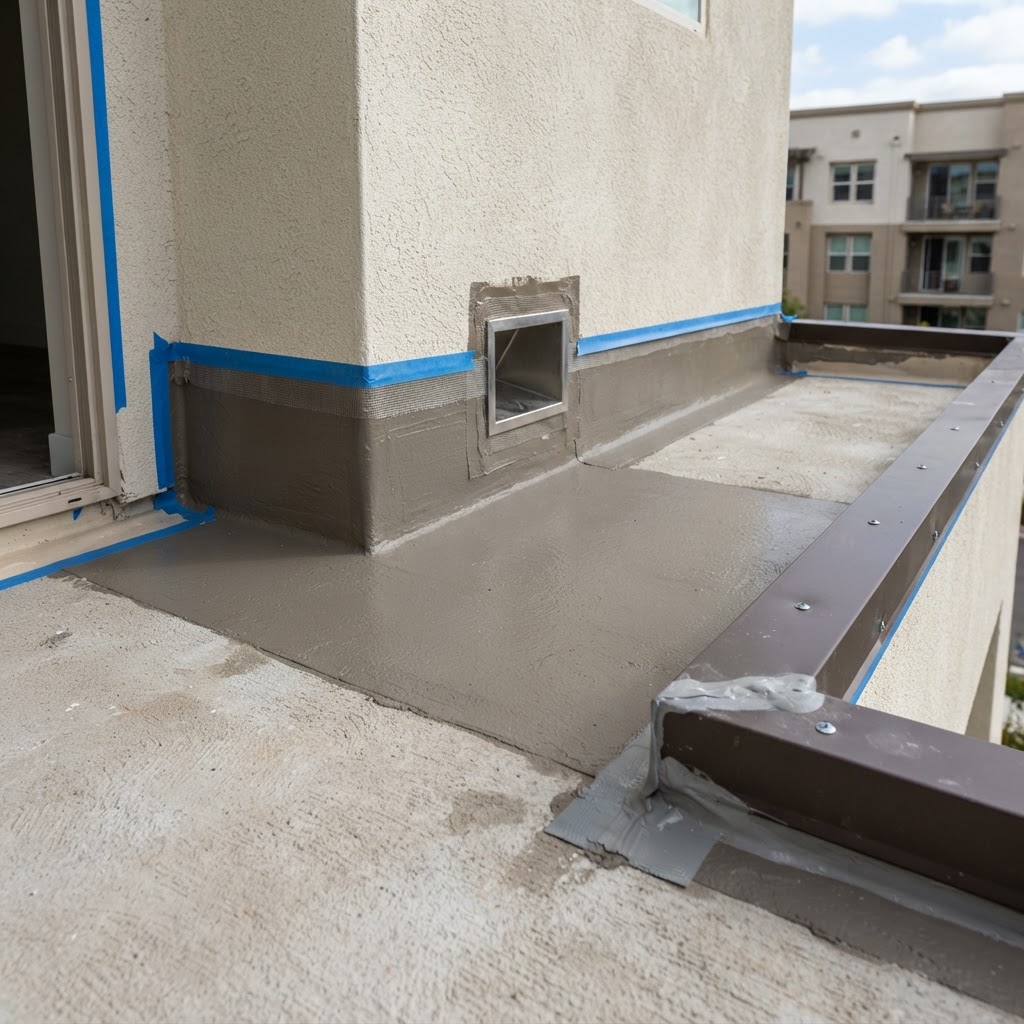
Addresses transitions, edges and penetrations as a connected system
How Noble Approaches the Work
Inspection and Application Process
Inspect the surface, drainage paths, edges and visible transitions.
Identify damaged areas and confirm the substrate is suitable for the proposed system.
Prepare and repair the surface as required by the selected coating or membrane.
Apply the compatible waterproofing system with attention to details and terminations.
Allow required cure time and review the finished surface before normal use.
Materials & Compatibility
The Right System Starts With the Surface
The appropriate membrane or traffic-bearing coating depends on the substrate, exposure, drainage, movement and intended use. Product compatibility and manufacturer instructions matter.
Frequently Asked Questions
Not automatically. The existing surface, moisture condition, drainage, adhesion and compatibility must be evaluated first.
A waterproof layer manages water at the surface, but persistent ponding or incorrect slope may require separate drainage or substrate corrections.
Explore Next