Waterproofing Guide
How Water Moves Through Buildings and Why the Leak May Appear Elsewhere
01
Understanding Water Migration Patterns
When you notice a water stain on your ceiling or wall, it is natural to assume the leak is directly above or behind that specific area. However, water is highly mobile once it breaches the building envelope. It often travels along structural framing, insulation, or sub-flooring, moving horizontally until it reaches a low point or an obstruction where it finally pools. This phenomenon explains why a stain in a living room might actually originate from a compromised seal on a balcony or roof transition located several feet away.
02
Vulnerable Points in the Building Envelope
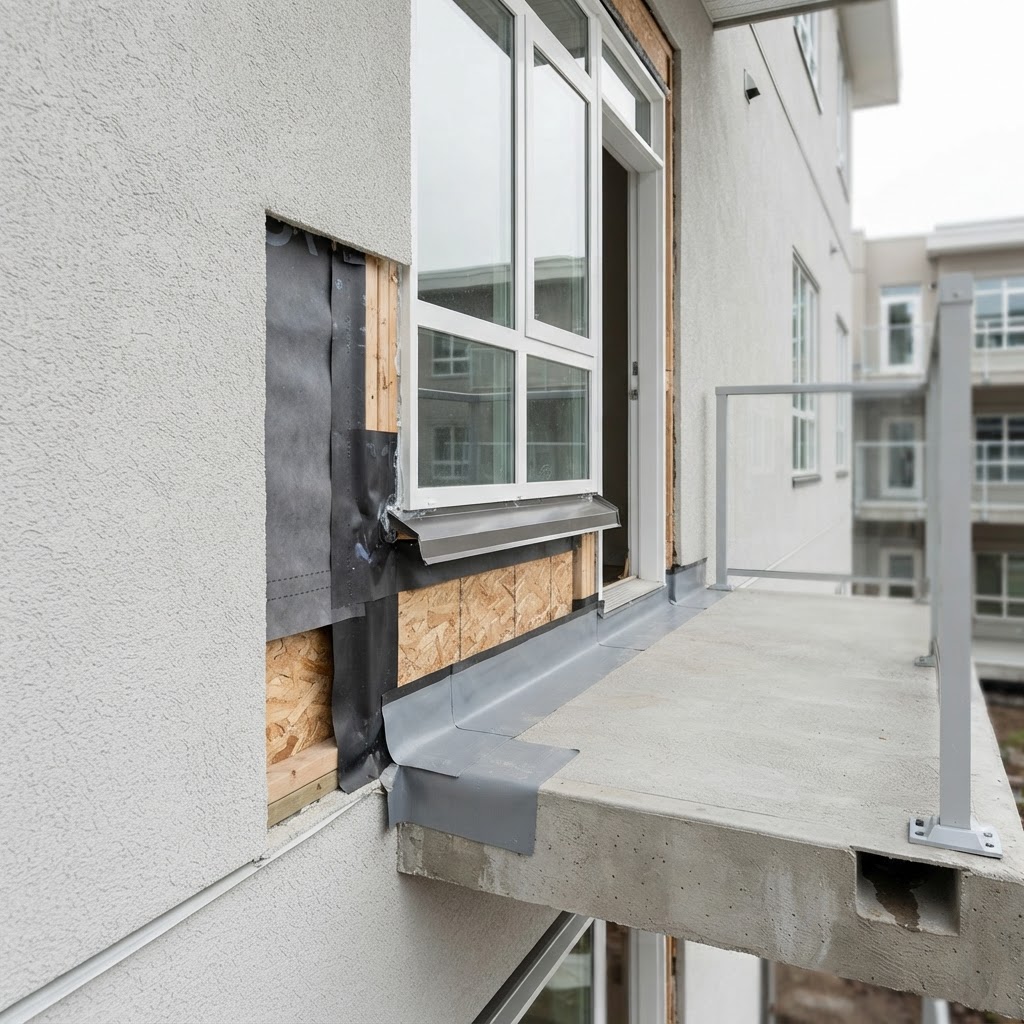
The building envelope acts as the primary barrier between your interior space and the elements. Moisture typically infiltrates through discontinuities where different materials meet, such as window perimeters, door frames, utility penetrations, and flashing transitions. When these junctions are not properly sealed, or when exterior coatings degrade, water can bypass the building's defenses. Our exterior waterproofing service focuses on identifying and reinforcing these critical interfaces to maintain a continuous, protective barrier.
03
The Role of Weather in Diagnostic Accuracy
The specific conditions under which a leak appears provide vital clues for diagnosis. For example, if moisture only appears during heavy, wind-driven rain, it suggests that water is being forced behind cladding or through vertical flashing on the windward side of the property. By observing whether a leak occurs during light, steady rain or only during severe weather events, you provide our team with the necessary context to isolate the entry point more effectively during an on-site evaluation.
04
Why Cosmetic Repairs Often Fail
Attempting to fix a leak by painting over a stain or applying a temporary sealant is rarely effective. These measures often mask the symptom while trapping moisture within the wall cavity. This trapped water can accelerate the degradation of structural materials and promote mold growth, all while obscuring the evidence needed to trace the leak to its true source. Addressing the root cause is always more cost-effective than hiding the visible damage.
05
The Value of a Systematic Inspection
A professional waterproofing assessment goes beyond the immediate area of concern. We perform a comprehensive evaluation of the entire building system, including drainage paths, the condition of existing coatings, and the integrity of joints and transitions. By analyzing how various components interact, we can determine whether a localized repair is sufficient or if a more integrated approach is required to ensure long-term protection.
06
Protecting Your Property Investment
Water intrusion is a progressive issue that rarely resolves without intervention; if left unaddressed, it can lead to significant structural damage. If you are concerned about moisture in your property and are located within our service areas—including the Santa Clarita Valley, San Fernando Valley, Simi Valley, or Agoura Hills—we are here to help. Please visit our service areas page to confirm your location, and use our online contact form to schedule a professional assessment today.
Common Questions
Frequently Asked Questions
Water follows the path of least resistance, often traveling along internal framing, joists, or flashing before it finds a way to drip into your living space. This makes the visible stain a poor indicator of the actual entry point.
Painting over a stain is not recommended because it hides the evidence of the leak without fixing the underlying problem. This can trap moisture inside your walls, leading to hidden rot or mold growth.
Providing details about when the leak occurs—such as during heavy wind or specific weather events—and noting any visible exterior changes like cracked stucco or worn deck coatings can significantly assist in a faster, more accurate diagnosis.
Continue Learning
Related Waterproofing Guides
Planning a Waterproofing Project?
Noble Waterproofing & Coatings provides free, no-obligation estimates for residential and commercial properties across the Santa Clarita Valley, San Fernando Valley, Simi Valley, and Agoura Hills.