Waterproofing Guide
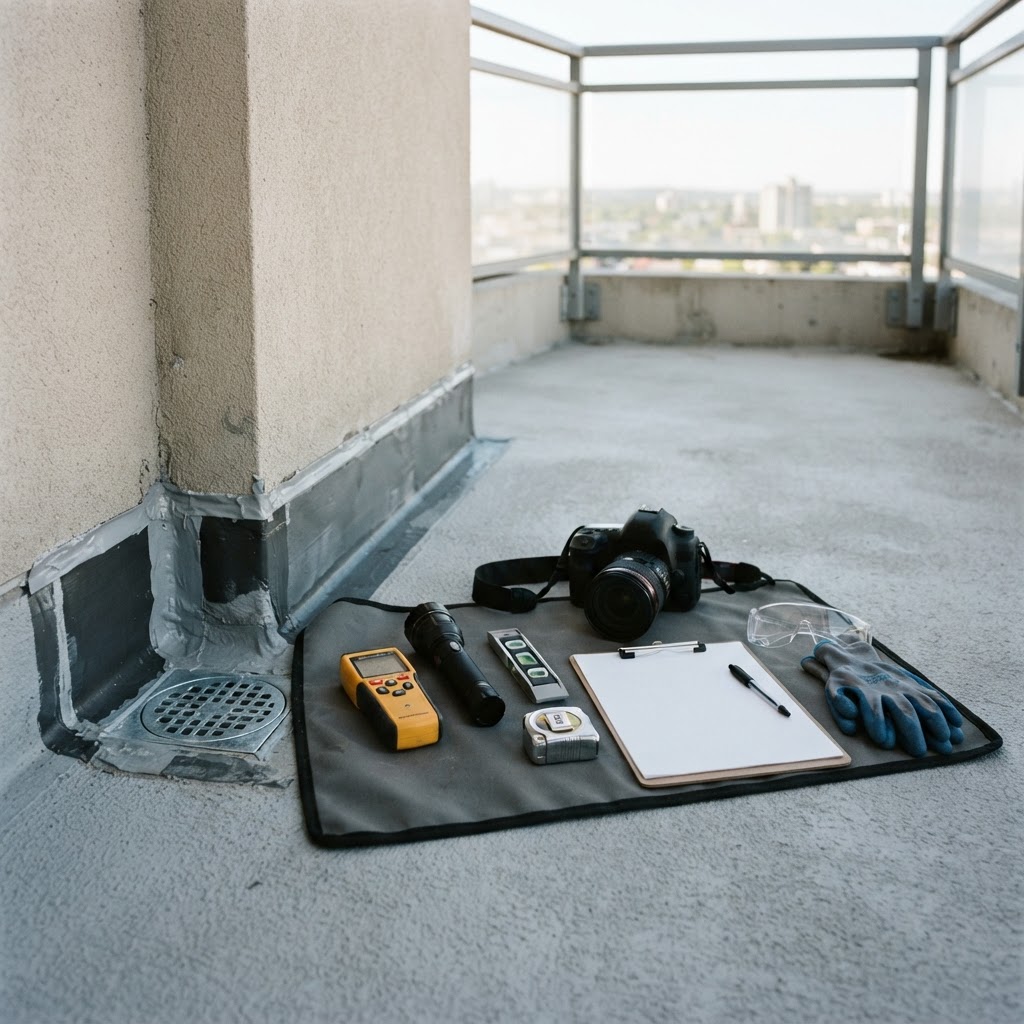
What Happens During a Professional Waterproofing Inspection?
01
Reviewing Property Moisture History
The diagnostic process begins by establishing a clear timeline of your building's performance. Our team investigates when specific symptoms—such as peeling coatings, efflorescence, or interior staining—first appeared and whether these issues correlate with seasonal weather patterns or specific storm events. By reviewing past maintenance records and previous attempts at sealing, we can better distinguish between isolated surface wear and deeper, systemic vulnerabilities within the building envelope.
02
Tracing Symptoms to the Root Cause
Visible water damage is often the final destination of a long path taken by moisture through a structure. Because water frequently travels along structural members before manifesting as a stain, we look beyond the immediate area of concern to locate the actual breach. Identifying the true entry point is a critical prerequisite before performing any necessary waterproofing repairs, as treating only the symptom often leads to recurring issues.
03
Evaluating Critical Transitions and Flashing
The most vulnerable points in any building's defense are the transitions where different materials meet or where penetrations occur. We conduct a rigorous examination of seams, joints, and flashing details on balconies, walkways, and roof surfaces. These areas are subject to constant environmental stress and thermal movement, making them the most likely locations for the protective barrier to fail.
04
Assessing Drainage and Surface Performance
Effective waterproofing is fundamentally tied to a surface's ability to shed water efficiently. We evaluate the slope and drainage design of your exterior surfaces to ensure that water is directed away from the building. If water is allowed to pond, it increases hydrostatic pressure and accelerates the degradation of protective coatings, which can lead to premature system failure.
05
Determining Material Compatibility
Applying new materials over existing, incompatible layers is a frequent cause of system failure. Our inspection includes a thorough assessment of the current substrate to determine which systems will bond effectively. We prioritize proper surface preparation, ensuring that the foundation is clean, sound, and ready to accept a new, durable protective layer that will perform as intended.
06
Defining a Clear Scope of Work
The final stage of our inspection is the creation of a transparent, project-specific plan. We outline the necessary steps—from surface cleaning and crack repair to the application of compatible finish systems—so you know exactly what to expect. This scope distinguishes between confirmed issues and areas that may require ongoing observation, providing a clear roadmap for restoring your property's protection.
07
Schedule Your Professional Evaluation
If you are concerned about moisture intrusion or the condition of your exterior surfaces, taking proactive steps is the best way to prevent costly damage. We provide expert assessments across our service areas, including the Santa Clarita Valley, San Fernando Valley, Simi Valley, and Agoura Hills. To get started, please reach out to our team through our contact form to discuss your property's specific needs.
Common Questions
Frequently Asked Questions
While a professional inspection is highly effective at identifying visible evidence and likely entry points, some conditions may remain concealed behind walls or finished surfaces. An expert assessment will explain the findings, the logic behind the recommended repairs, and any areas where uncertainty remains.
Having a timeline of when you first noticed the issue, photos of the symptoms during different weather conditions, and records of any past repairs is very helpful. This information allows the inspector to work more efficiently and accurately.
Our focus is on waterproofing and protective coating systems. If an inspection reveals underlying structural damage, we will advise you on the need for a qualified structural specialist to address those specific concerns before waterproofing work proceeds.
Continue Learning
Related Waterproofing Guides
Planning a Waterproofing Project?
Noble Waterproofing & Coatings provides free, no-obligation estimates for residential and commercial properties across the Santa Clarita Valley, San Fernando Valley, Simi Valley, and Agoura Hills.