
Waterproofing Guide
Essential Guide to Balcony Waterproofing and Surface Protection
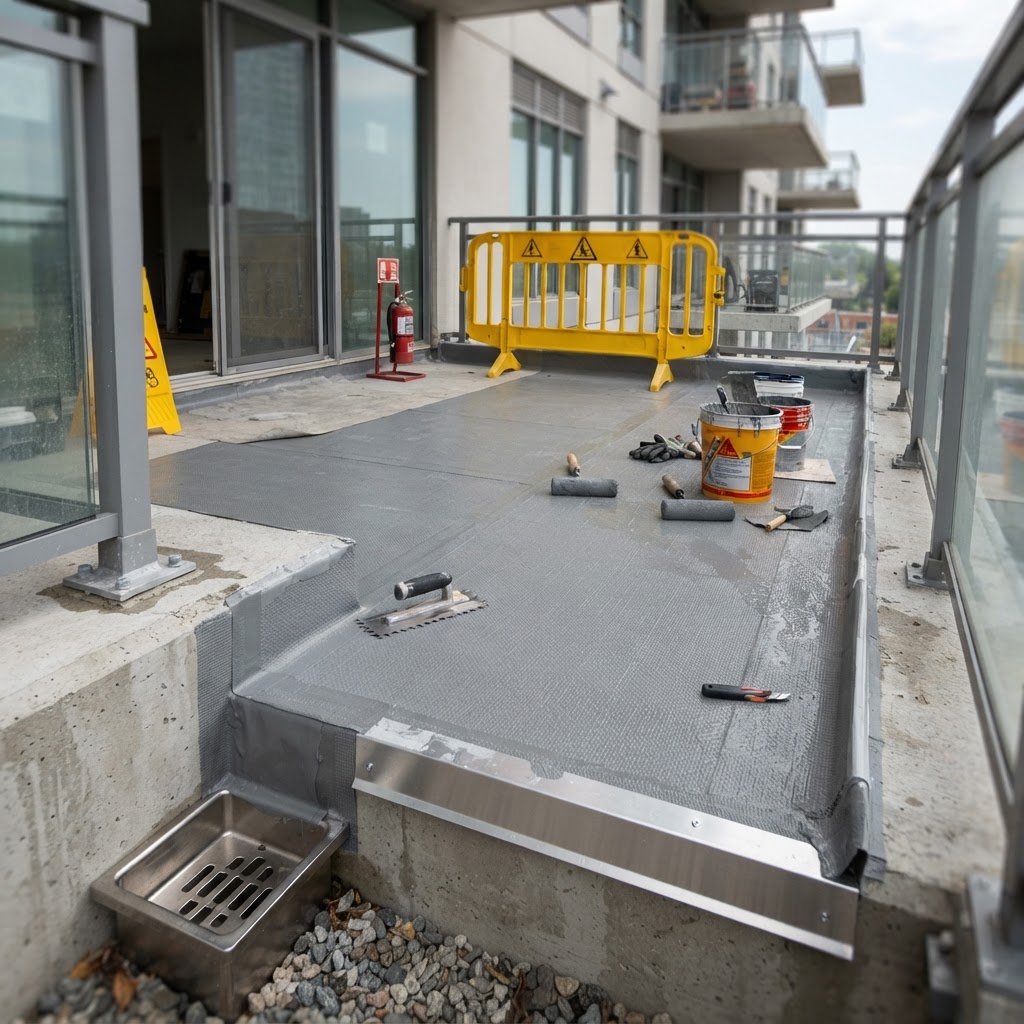
01
The Importance of Proactive Balcony Protection
Balconies are constantly exposed to environmental stressors, including intense UV radiation, thermal expansion, and seasonal precipitation. Without a robust balcony waterproofing system, moisture will eventually penetrate the substrate. Over time, this leads to the degradation of essential structural components, such as wood framing or metal fasteners, which can compromise the safety and stability of the entire structure.
02
Mastering Drainage and Slope Requirements
Effective water management is the most important factor in preventing premature system failure. A balcony must be constructed with a consistent, positive slope—typically at least 1/4 inch per foot—to ensure that water flows efficiently toward drains rather than pooling on the surface. Standing water creates hydrostatic pressure that can force moisture through even microscopic fissures in the membrane, leading to leaks and long-term damage.
03
Securing Critical Transitions and Flashing
The most vulnerable points on any balcony are the intersections where the deck meets the building wall, door thresholds, and railing post penetrations. These areas require meticulous flashing and high-quality sealant application to create a continuous, watertight seal. If these transitions are not properly integrated, water can migrate behind the wall assembly, causing hidden damage that is often not discovered until it becomes severe.
04
Selecting High-Performance Traffic-Bearing Systems
Choosing the right coating system involves balancing durability with the flexibility required for pedestrian traffic. A high-quality traffic-bearing system must be elastic enough to accommodate the natural movement of the building while remaining tough enough to resist abrasion and UV degradation. Ensuring the system is fully compatible with the existing substrate is essential for achieving a strong, long-lasting bond.
05
Recognizing Early Warning Signs of Failure
Proactive maintenance is the best way to avoid costly repairs. Property owners should perform regular visual inspections to look for common distress signals, such as peeling or bubbling coatings, cracked sealants, or the presence of efflorescence. Additionally, water stains on the ceiling below or a persistent musty odor near the balcony are clear indicators that the waterproofing system may be compromised and requires professional attention.
06
Professional Assessment and Service Areas
Because every balcony has unique construction requirements, a professional inspection is the most reliable way to identify potential vulnerabilities before they escalate. We provide expert waterproofing solutions throughout our service areas, helping property owners maintain safe and resilient outdoor environments. If you are concerned about the condition of your balcony, please use our contact form to reach out and schedule a professional consultation.
Common Questions
Frequently Asked Questions
We recommend scheduling a thorough visual inspection at least twice a year, ideally before and after the rainy season, to identify early signs of wear or drainage issues.
Applying a new sealant over a failed system is rarely effective. A professional assessment is necessary to determine if the underlying membrane is sound or if the system requires specialized repairs or a full replacement.
Key warning signs include water stains on the underside of the balcony, bubbling or peeling surface coatings, cracked or deteriorating sealants, and the appearance of efflorescence.
Continue Learning
Related Waterproofing Guides
Planning a Waterproofing Project?
Noble Waterproofing & Coatings provides free, no-obligation estimates for residential and commercial properties across the Santa Clarita Valley, San Fernando Valley, Simi Valley, and Agoura Hills.