Waterproofing Guide
Maintaining Waterproofed Decks and Walkways After Installation
01
The Importance of Routine Visual Inspections
Consistent oversight is the most effective way to ensure your waterproofing system remains functional. Daily exposure to UV radiation, thermal expansion, and foot traffic can lead to gradual surface fatigue. By conducting routine visual checks, you can identify early warning signs—such as minor abrasions, thinning of the topcoat, or localized surface stress—before they escalate into significant moisture intrusion that could threaten the structural integrity of your deck or walkway.
02
Managing Drainage and Debris
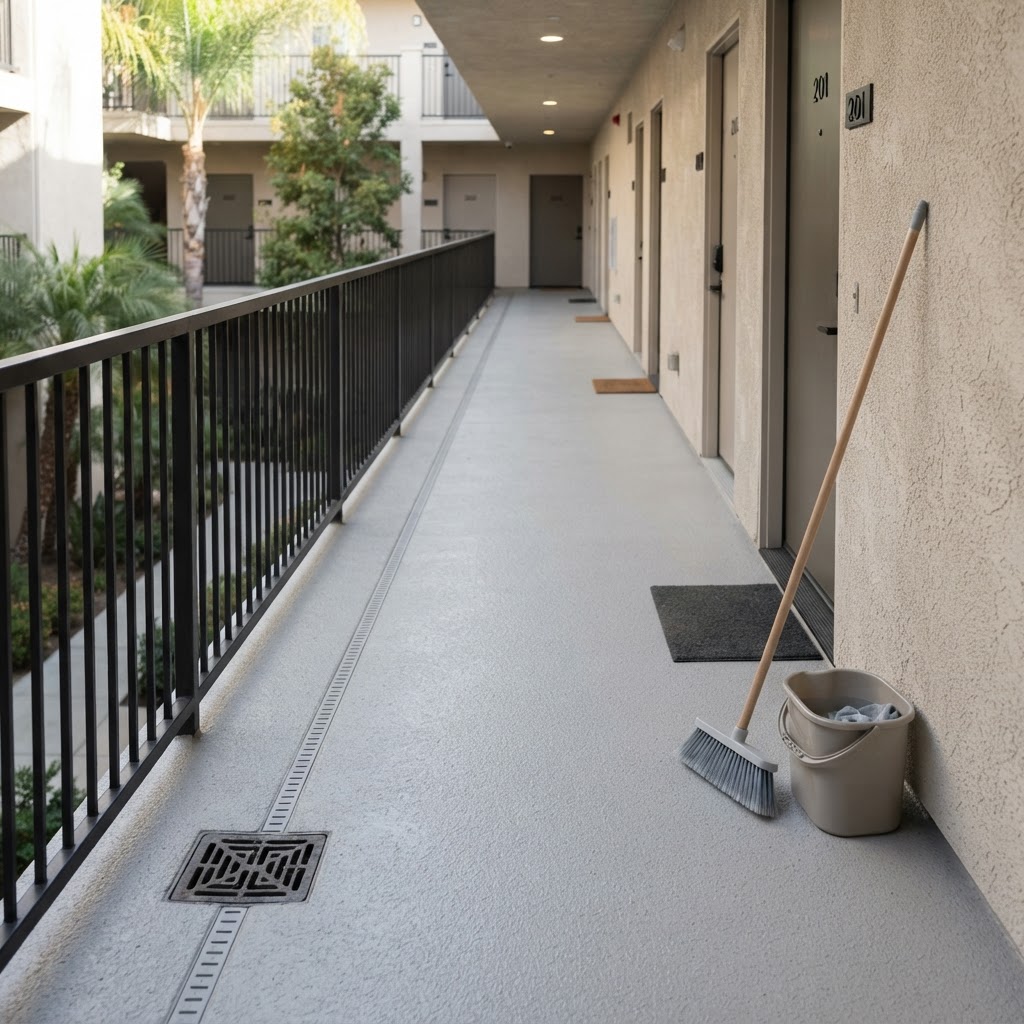
Effective water management is critical for the longevity of your coating. Organic matter like leaves, dirt, and twigs can trap moisture against the surface, which may lead to the premature breakdown of the protective membrane. Ensure that all scuppers, drains, and perimeter edges remain clear of obstructions. If you notice water pooling on your deck long after a rainstorm, this is a strong indicator that your drainage system requires professional attention to prevent long-term substrate damage.
03
Best Practices for Surface Cleaning
Keeping your deck clean is vital, but the method you choose is just as important as the frequency. Avoid high-pressure washing, as the intense force can easily breach the protective membrane, particularly at critical seams, joints, and flashing transitions. Instead, use a soft-bristled brush and mild, manufacturer-approved detergents to remove dirt and contaminants. This gentle approach effectively cleans the surface without compromising the chemical bond or physical integrity of the waterproofing system.
04
Focusing on High-Traffic and Transition Zones
Wear is rarely uniform across an entire surface. You should pay extra attention to high-traffic areas, such as entryways, stairs, and primary walking paths, where the coating experiences the most friction. Additionally, monitor transition points where the horizontal deck meets vertical walls, railings, or door thresholds. These interfaces are common locations for sealant separation; if you observe gaps, peeling, or signs of moisture, it is time to arrange for a professional inspection.
05
Preventing Mechanical Damage
Physical impact is a leading cause of premature coating failure. To protect your surface, place protective pads under the legs of heavy furniture and avoid dragging sharp or heavy objects across the deck. If you must move large items, use a protective mat or a dolly to distribute weight and prevent gouging the membrane. Small, preventative habits significantly contribute to maintaining both the aesthetic and functional quality of your waterproofed surfaces.
06
The Risks of Incompatible DIY Repairs
When you identify a crack or a worn patch, it is tempting to apply a quick, store-bought sealant. However, DIY repairs often fail because they use materials that are incompatible with the existing system or fail to address the root cause of the damage. Applying an improper patch can trap moisture, which accelerates substrate decay. If you identify a concern, document the area and contact our team to ensure the repair is handled with the correct, compatible materials.
07
Professional Oversight for Long-Term Security
While routine homeowner maintenance is essential, professional oversight provides a deeper level of security. We recommend scheduling a professional inspection after significant seasonal weather changes or if you notice persistent symptoms like bubbling, peeling, or localized discoloration. Our team is equipped to assess the health of your coating and provide the necessary maintenance to keep your property protected year-round.
Common Questions
Frequently Asked Questions
We strongly advise against using high-pressure washing equipment. The intense pressure can easily penetrate the coating, especially at critical joints and flashing points, which may lead to leaks and underlying structural damage.
Avoid applying DIY patches, as these can trap moisture and cause further issues. Instead, document the location and size of the crack and contact us for a professional assessment to determine if the issue is surface-level or indicative of deeper movement.
Beyond your own routine visual checks, we recommend a professional inspection following major seasonal weather events or if you notice new symptoms such as peeling, bubbling, or standing water that does not drain properly.
Continue Learning
Related Waterproofing Guides
Planning a Waterproofing Project?
Noble Waterproofing & Coatings provides free, no-obligation estimates for residential and commercial properties across the Santa Clarita Valley, San Fernando Valley, Simi Valley, Calabasas, Agoura Hills, Malibu, Santa Monica & the Westside.